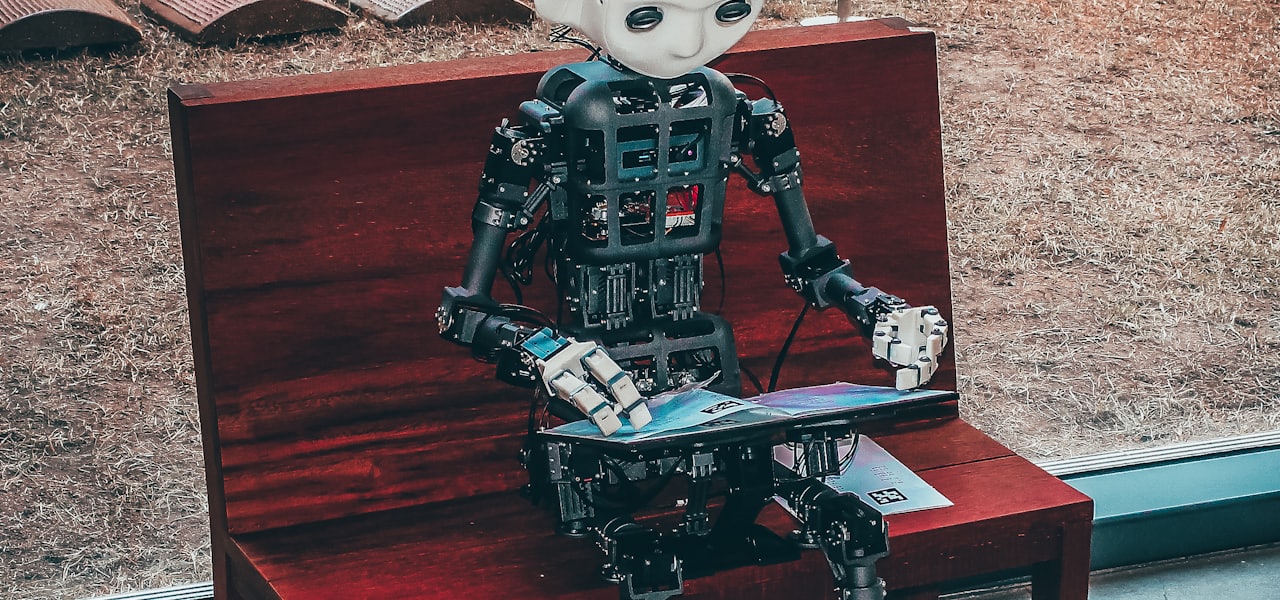
Semi-automation is a process or procedure that is performed by the combined activities of man and machine with both human and machine steps typically orchestrated by a centralized computer controller. Within manufacturing, production processes may be fully manual, semi-automated, or fully automated. In this case, semi-automation may vary in its degree of manual and automated steps. Semi-automated manufacturing processes are typically orchestrated by a computer controller which sends messages to the worker at the time in which he/she should perform a step. The controller typically waits for feedback that the human performed step has been completed via either a human-machine interface or via electronic sensors distributed within the process. Controllers within semi-automated processes may either directly control machinery or send signals to machinery distributed within the process. Centralized computer controllers within semi-automated processes orchestrate processes by instructing the worker, providing electronic communication and control to process equipment, tools, or machines, as well as perform data management to record and ensure that the process meets established process criteria. Many manufacturers choose not to fully automate a process, and instead implement semi-automation due to the complexity of the task, or the number of products produced is too low to justify the investment in full automation. Other processes may not be fully automated because it may reduce the flexibility to easily adapt the processes to reflect production needs.
Digital transaction management
Digital transaction management (DTM) is a category of cloud services designed to digitally manage document-based transactions. DTM removes the friction inherent in transactions that involve people, documents, and data to create faster, easier, more convenient, and secure processes. DTM goes beyond content and document management to include e-signatures, authentication and non-repudiation; enabling co-browsing between the customer and the business; document transfer and certification; secure archiving that goes beyond records management; and a variety of meta-processes around managing electronic transactions and the documents associated with them. DTM standards are proposed and managed by the xDTM Standard Association Aragon Research has estimated that "by YE 2016, 70% of large enterprises will have a DTM initiative underway or fully implemented."
Protégé (software)
Protégé is a free, open source ontology editor and a knowledge management system. The Protégé meta-tool was first built by Mark Musen in 1987 and has since been developed by a team at Stanford University. The software is the most popular and widely used ontology editor in the world. == Overview == Protégé provides a graphical user interface to define ontologies. It also includes deductive classifiers to validate that models are consistent and to infer new information based on the analysis of an ontology. Like Eclipse, Protégé is a framework for which various other projects suggest plugins. This application is written in Java and makes heavy use of Swing to create the user interface. According to their website, there are over 300,000 registered users. A 2009 book calls it "the leading ontological engineering tool". Protégé is developed at Stanford University and is made available under the BSD 2-clause license. Earlier versions of the tool were developed in collaboration with the University of Manchester.
Ballie
Ballie is an AI robot created by Samsung to be released in 2026. It is an autonomous robot which has the ability to control smart home devices. Ballie can text, send pictures and follow commands through SmartThings. It can also show workout information shared from a Galaxy Watch. Ballie can make video calls and welcome you home. == History == It was first unveiled at Samsung's CES event in CES 2020, and later updated the design in CES 2024, and will be later released in 2026. == Design ==
Turing's Wager
Turing's Wager is a philosophical argument that claims it is impossible to infer or deduce a detailed mathematical model of the human brain within a reasonable timescale, and thus impossible in any practical sense. The argument was first given in 1950 by the computational theorist Alan Turing in his paper Computing Machinery and Intelligence, published in Mind (Turing 1950, p. 453). The argument asserts that determining any mathematical model of a computer (its source code or any isomorphic equivalent such as a Turing machine or virtual simulation) is not possible in a reasonable timeframe. As a consequence, determining a mathematical model of the human brain (which is, by its nature, more complicated) must also be impossible within that timeframe. == Effect of modern technology on the wager == It has been argued that modern neuroimaging techniques will allow researchers to create accurate simulations of the human mind within the 21st century (Kurzweil 2012; Markram 2012, Fildes 2009), thereby overcoming the wager. Others have argued that such claims are unjustified (Thwaites et al. 2017). == Relationship between Turing's Wager and the Turing Test == The Turing Test attempts to define when a machine might be said to possess human intelligence, while Turing's Wager is an argument aiming to demonstrate that characterising the brain mathematically will take over a thousand years. While building an artificial intelligence and mapping the human brain are both difficult endeavours, the former is actually a sub-problem of the latter (Thwaites et al. 2017).
Discovery system (artificial intelligence)
A discovery system is an artificial intelligence system that attempts to discover new scientific concepts or laws. The aim of discovery systems is to automate scientific data analysis and the scientific discovery process. Ideally, an artificial intelligence system should be able to search systematically through the space of all possible hypotheses and yield the hypothesis - or set of equally likely hypotheses - that best describes the complex patterns in data. During the era known as the second AI summer (approximately 1978–1987), various systems akin to the era's dominant expert systems were developed to tackle the problem of extracting scientific hypotheses from data, with or without interacting with a human scientist. These systems included Autoclass, Automated Mathematician, Eurisko, which aimed at general-purpose hypothesis discovery, and more specific systems such as Dalton, which uncovers molecular properties from data. The dream of building systems that discover scientific hypotheses was pushed to the background with the second AI winter and the subsequent resurgence of subsymbolic methods such as neural networks. Subsymbolic methods emphasize prediction over explanation, and yield models which works well but are difficult or impossible to explain which has earned them the name black box AI. A black-box model cannot be considered a scientific hypothesis, and this development has even led some researchers to suggest that the traditional aim of science - to uncover hypotheses and theories about the structure of reality - is obsolete. Other researchers disagree and argue that subsymbolic methods are useful in many cases, just not for generating scientific theories. == Discovery systems from the 1970s and 1980s == Autoclass was a Bayesian Classification System written in 1986 Automated Mathematician was one of the earliest successful discovery systems. It was written in 1977 and worked by generating a modifying small Lisp programs Eurisko was a Sequel to Automated Mathematician written in 1984 Dalton is a still maintained program capable of calculating various molecular properties initially launched in 1983 and available in open source since 2017 Glauber is a scientific discovery method written in the context of computational philosophy of science launched in 1983 == Modern discovery systems (2009–present) == After a couple of decades with little interest in discovery systems, the interest in using AI to uncover natural laws and scientific explanations was renewed by the work of Michael Schmidt, then a PhD student in Computational Biology at Cornell University. Schmidt and his advisor, Hod Lipson, invented Eureqa, which they described as a symbolic regression approach to "distilling free-form natural laws from experimental data". This work effectively demonstrated that symbolic regression was a promising way forward for AI-driven scientific discovery. Since 2009, symbolic regression has matured further, and today, various commercial and open source systems are actively used in scientific research. Notable examples include Eureqa, now a part of DataRobot AI Cloud Platform, AI Feynman, and QLattice.
RevoScaleR
RevoScaleR is a machine learning package in R created by Microsoft. It is available as part of Machine Learning Server, Microsoft R Client, and Machine Learning Services in Microsoft SQL Server 2016. The package contains functions for creating linear model, logistic regression, random forest, decision tree and boosted decision tree, and K-means, in addition to some summary functions for inspecting and visualizing data. It has a Python package counterpart called revoscalepy. Another closely related package is MicrosoftML, which contains machine learning algorithms that RevoScaleR does not have, such as neural network and SVM. In June 2021, Microsoft announced to open source the RevoScaleR and revoscalepy packages, making them freely available under the MIT License. == Concepts == Many R packages are designed to analyze data that can fit in the memory of the machine and usually do not make use of parallel processing. RevoScaleR was designed to address these limitations. The functions in RevoScaleR orientate around three main abstraction concepts that users can specify to process large amount of data that might not fit in memory and exploit parallel resources to speed up the analysis. === Compute Contexts === A compute context refers to the location where the computation on the data happens. It could be "local" (on the client machine) or "remote" (on a data platform such as a SQL server, or Spark). Pushing the computation to a remote server allows people to take advantage of the greater compute resources that a remote machine may have. If the data being analyzed reside on the same machine, using a remote compute context also removes the need to pull data across the network onto the client machine. === Data source === Data source defines where the data comes from. There are various data sources available in RevoScaleR, such as text data, Xdf data, in-SQL data, and a spark dataframe. People can wrap their data in a data source object and use that as run analytics in different compute context. Different data sources are available in different compute context. For example, if the compute context is set to SQL server, then the only data source one can use would be an in-SQL data source. === Analytics === Analytic functions in RevoScaleR takes in data source object, a compute context, and the other parameters needed to build the specific model, such as formula for the logistic regression or the number of trees in a decision tree. In addition to those parameters, one can also specify the level of parallelism, such as the size of the data chunk for each process or number of processes to build the model. However, parallelism is only available in non-express edition. == Limitations == The package is mostly meant to be used with a SQL server or other remote machines. To fully leverage the abstractions it uses to process a large dataset, one needs a remote server and non-Express free edition of the package. It cannot be easily installed such as by running "install.packages("RevoScaleR")" like most open source R packages. It's available only through Microsoft R Client, a distribution of R for data science, or Microsoft Machine Learning Server (stand-alone with no SQL server attached), or Microsoft Machine Learning Services (a SQL server services). However, one can still use the analytics functions in an Express, free version of the package.